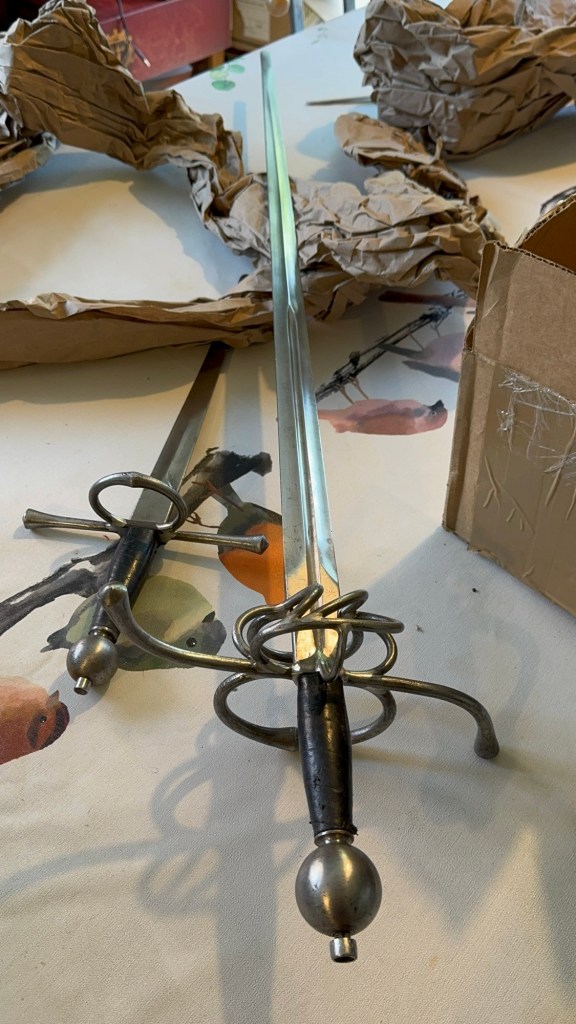
We are proud to partner with new HEMA gear supplier Historical Combat Armory in Canada.
To celebrate we are offering all attendees of our monthly meet ups the chance to win a discount coupon of $30, in addition to a 10% discount available to all members of our WhatsApp community who place group orders.
Think your club isn’t like those other clubs you hear about where bad behaviour goes unchecked? Think again! All clubs have the potential to grow toxic culture.
We tend to imagine our own club is utopian compared to the others you hear about on social media where bad things happen. I’m here to let you know that every club is fertile ground for toxic behaviour. But what can we do about it?
Please support my work on Patreon or Ko-Fi to get benefits and help me reach more listeners. Just leaving a review will make a big impact. Thank you.
9 things you were praised for as a girl that can make learning difficult as a woman.
Little girls are praised for all kinds of qualities and behaviours. What we carry into adulthood from this praise and these internal values can stymie our learning.
What these all have in common that makes them dangerous for you is they require you to have no boundaries. As women we are encouraged to give more and more of our time and energy, the driving force is often ourselves. Make sure you put some of that energy into keeping your boundaries and working on your own needs.
Please support my work on Patreon or Ko-Fi to get benefits and help me reach more listeners. Just leaving a review will make a big impact. Thank you.
🧠 The forgetting curve: conceived by Hermann Ebinghaus in 1885, this model demonstrates that learned information declines rapidly in the first 24 hours and then tails off if not revisited. The solution is to recall or practice immediately after and the next day.
🎯 No goal: this need not be lofty, a simple goal for each practice bout will give you focus and pull you in a direction. This may inspire further training and study goals. Get curious.
📅 Inconsistency: missing sessions increases the forgetting curve, meaning you’re always in catch up mode, always feeling “rusty”. The solution is making up the time – solo drilling at home, or paired drilling at sparring.
⚔️ Drilling/Sparring imbalance: You need both. Too much sparring results in ruts and limited repertoire, too much drilling results in very flat fencing with poor responses.
⛓️💥 Unconnected concepts: You may understand the concepts of timing, measure, counter etc. – but can you actually get them to work? Do you even fully understand them? Revisit fundamentals – basic skills are high level skills.
Please support my work on Patreon or Ko-Fi to get benefits and help me reach more listeners. Just leaving a review will make a big impact. Thank you.
🪞 Comparing yourself to others: The only person you should compare with is who you were yesterday.
💪🏼 Expecting improvement without effort outside of class: Class and even sparring are not the places where you’ll grow to your potential. You need to practice in your own time.
😴 Sparring on autopilot: If you can’t recall a fight you are going through the motions of your usual routine. Switch things up, record it, get feedback.
😖 Training through injury: Rest as needed, switch arms if you need to. It will bite you on the backside in the long run.
🗒️ Leaving your note book empty: keep notes of your training, thoughts, discoveries, and wishes. Refer back from time to time.
🦵 Forgetting to warm up: those injuries can be prevented you know.
📚 Being scared of the sources: Get curious about the sources, see if you can work out a small section that interests you.
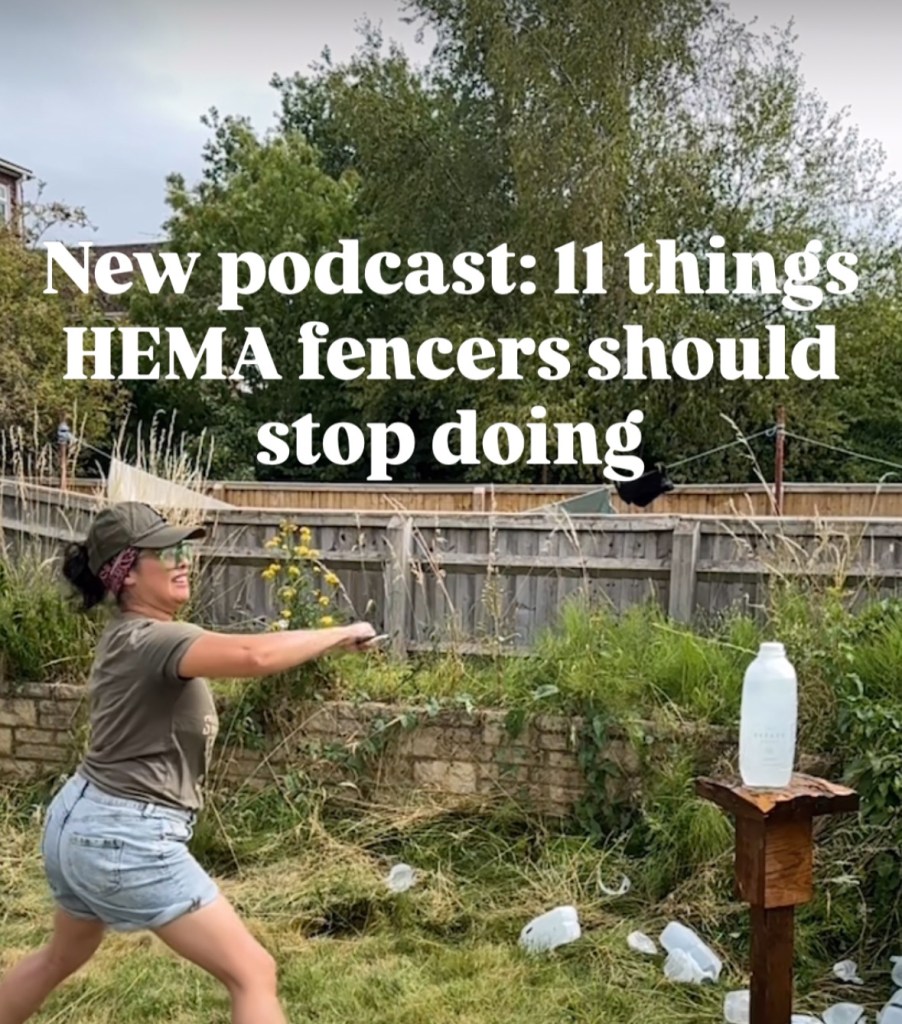
⚡️ Strikes without control: You have a duty to keep your training partners and opponents safe.
⚔️ Identifying with a weapon/system type: learn outside your comfort zone, find new systems that will inform the rest of your fencing.
🧼 Letting your gear ferment: Wash it already.
⏰ Waiting for motivation to strike: go when you’re feeling unmotivated and the motivation will emerge.
Please support my work on Patreon or Ko-Fi to get benefits and help me reach more listeners. Just leaving a review will make a big impact. Thank you.