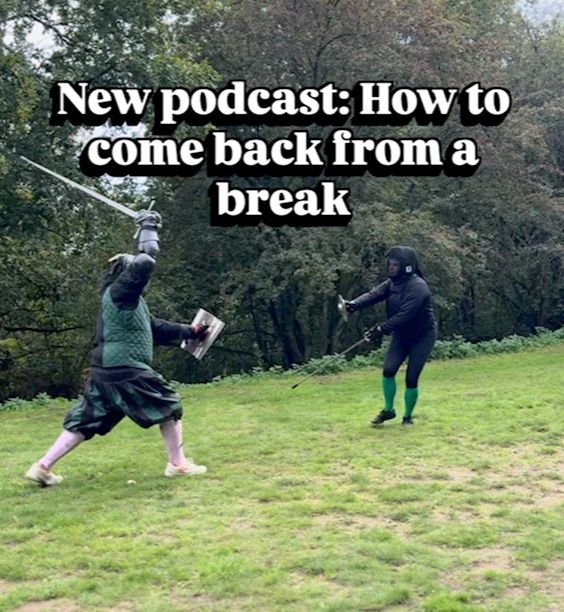
Did you ever take a break from HEMA (or anything in fact) and then struggle to come back to it, even if you love it very much?
In this episode I break down why it can be difficult to return to something, whether it’s been weeks, months, or decades in my case, and how to find your way back to it.
In mid October 2025 I visited Scotland for the very first time. Suit of Swords in Glasgow is Scotland’s Premier URG focused HEMA event and I was honoured to be invited to teach not just one but two classes at their inaugural launch.
Being the diligent reporter I am, I also took the opportunity to interview the principal organisers: Rose Jones and Madeleine Thompson.
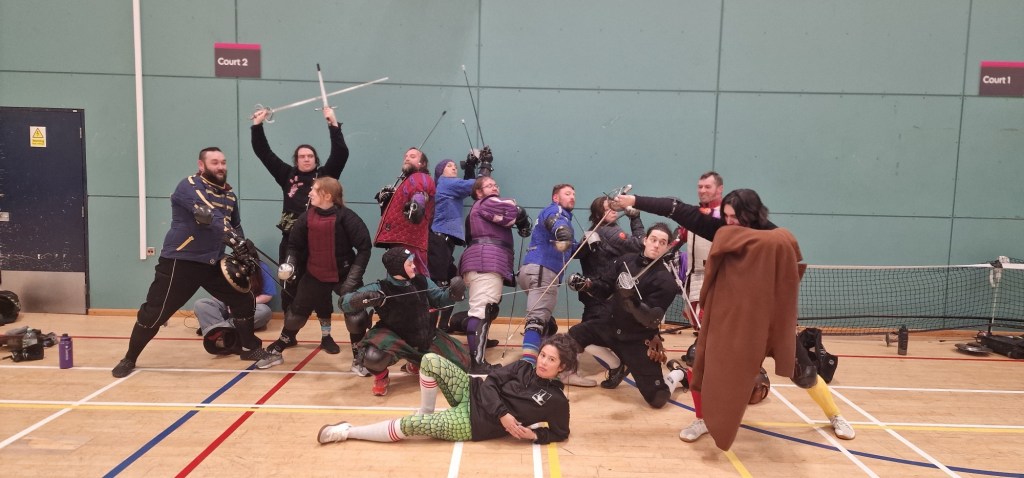
It was a truly excellent weekend, day one being filled to the brim with a variety of workshops from international URG instructors. The second day was tournaments, with rated Sabre and Longsword, followed by a more relaxed “Lady/ser Luck” mixed weapon competition.
In this interview we talk about the intricacies of organising events, the importance of representation in HEMA, and the unique challenges facing URG fencers and martial artists.
Fingers crossed they host this next year: don’t miss out if you get the chance to go!
👻 Are you terrified of the texts? Do they fill you with despair and horror? Well don’t fear, I’m going to give you some top tricks to take away the terror and treat yourself to some inside knowledge.
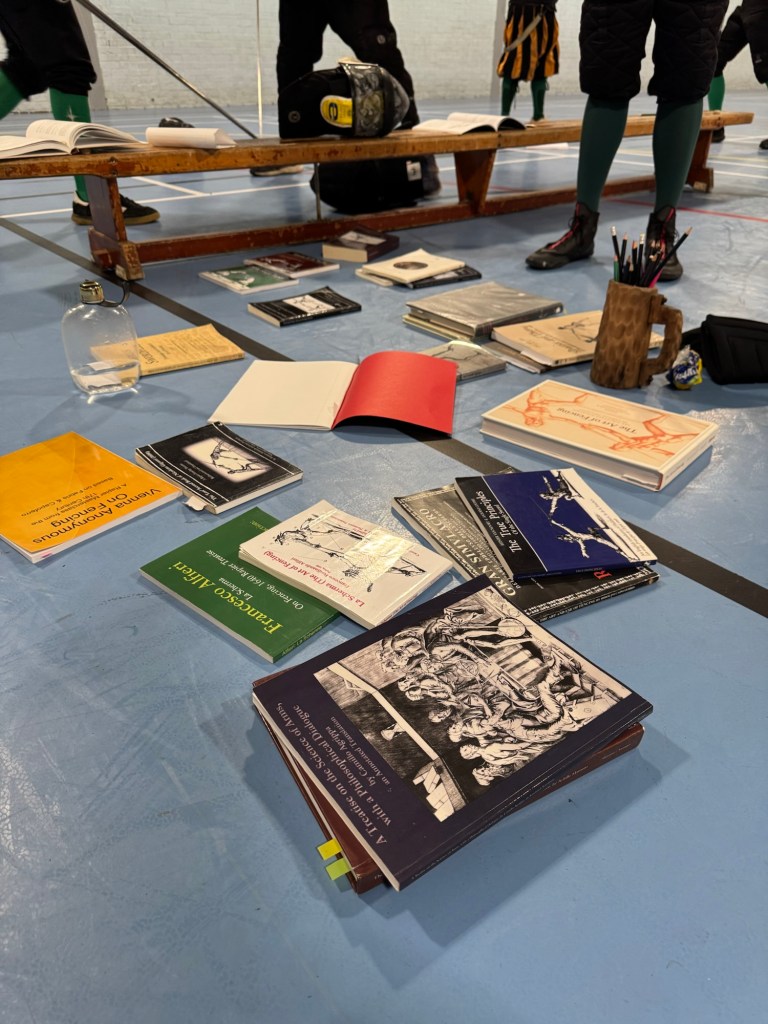
🪶 Fight books are written in a different time, and in a different language. In order to reach you and be understood they need to go through several processes first.
The lens of translation 🔍
🗣️ The translator or transcriber will have their own bias and understanding of the language and context. They will have included (or not) all the things they consider to be important.
🧑🏫 If you are learning all your historical fencing from a teacher you are viewing it through their understanding and experience. There’s nothing wrong with this, instructors are doing an amazing job bringing HEMA to new audiences.
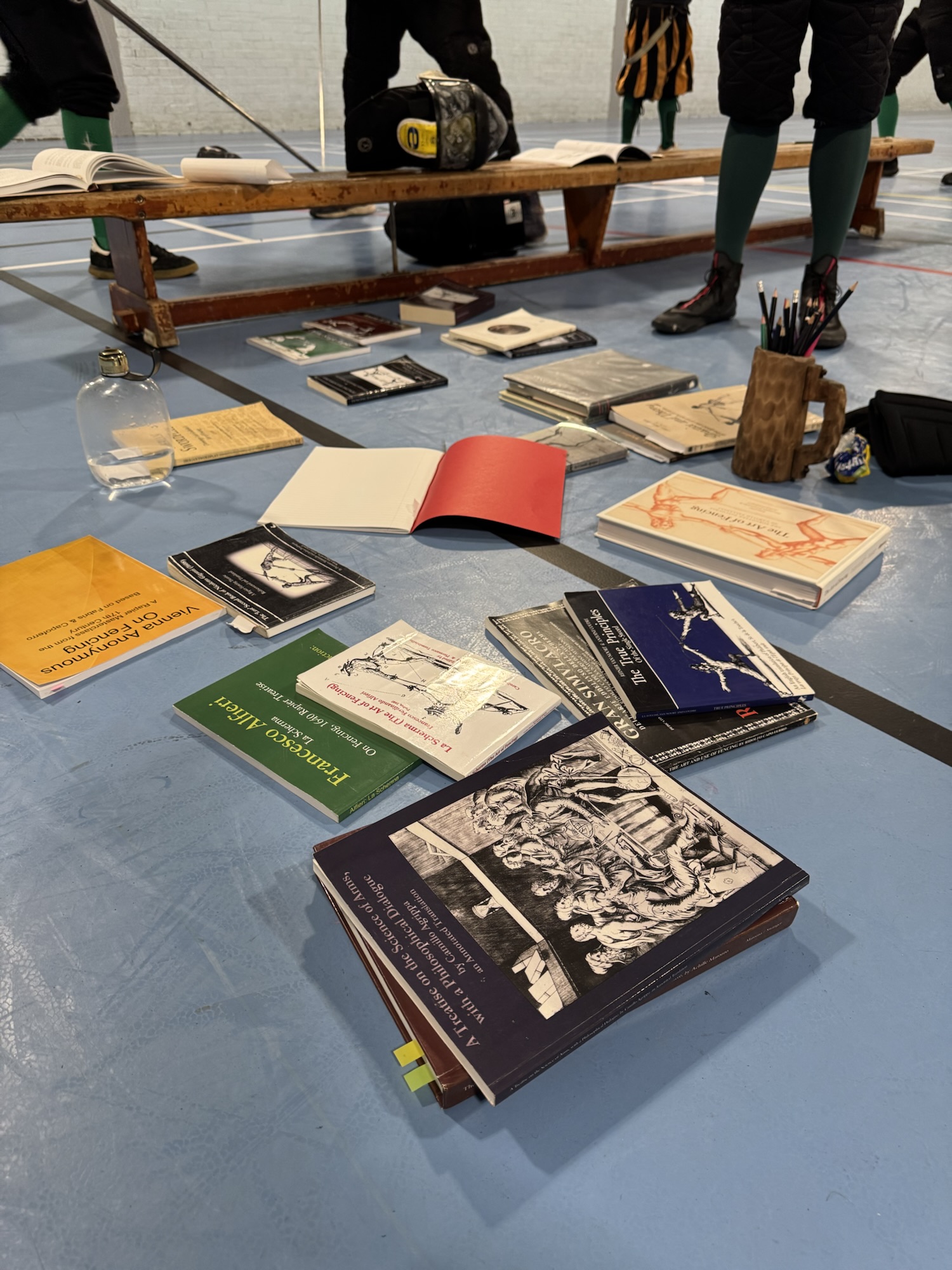
📕 However to gain a deeper understanding of what you are training, it helps to look at the sources yourself, to see how you understand and interpret their meaning. Again this will all be viewed through the lens of your own experience and understanding.
🤿 Diving into the texts
🍒 You can cherry pick what you want to look at. Don’t feel you need to have fully read and understood an entire manual cover to cover in order to gain insights. Interpretation can be hard work, so don’t be afraid or ashamed to pick a weapon or style or technique that you want to home in on. Simply taking a single phrase or action can take you down a whole rabbit warren of investigation, experimentation and study.
🚁 You can also take the helicopter view of a book. Read the chapter headings to see what’s covered; flick through the images to see what’s repeated, and what changes; scan a page to see what words come up a lot, and what is conspicuously absent. This will give you an idea of what the author considers to be important, and what is implicit.
🔬 You can compare what several masters say on a topic, and what they don’t say. This can give a contextual view for a period, or how something changes over time.


 By the Sword