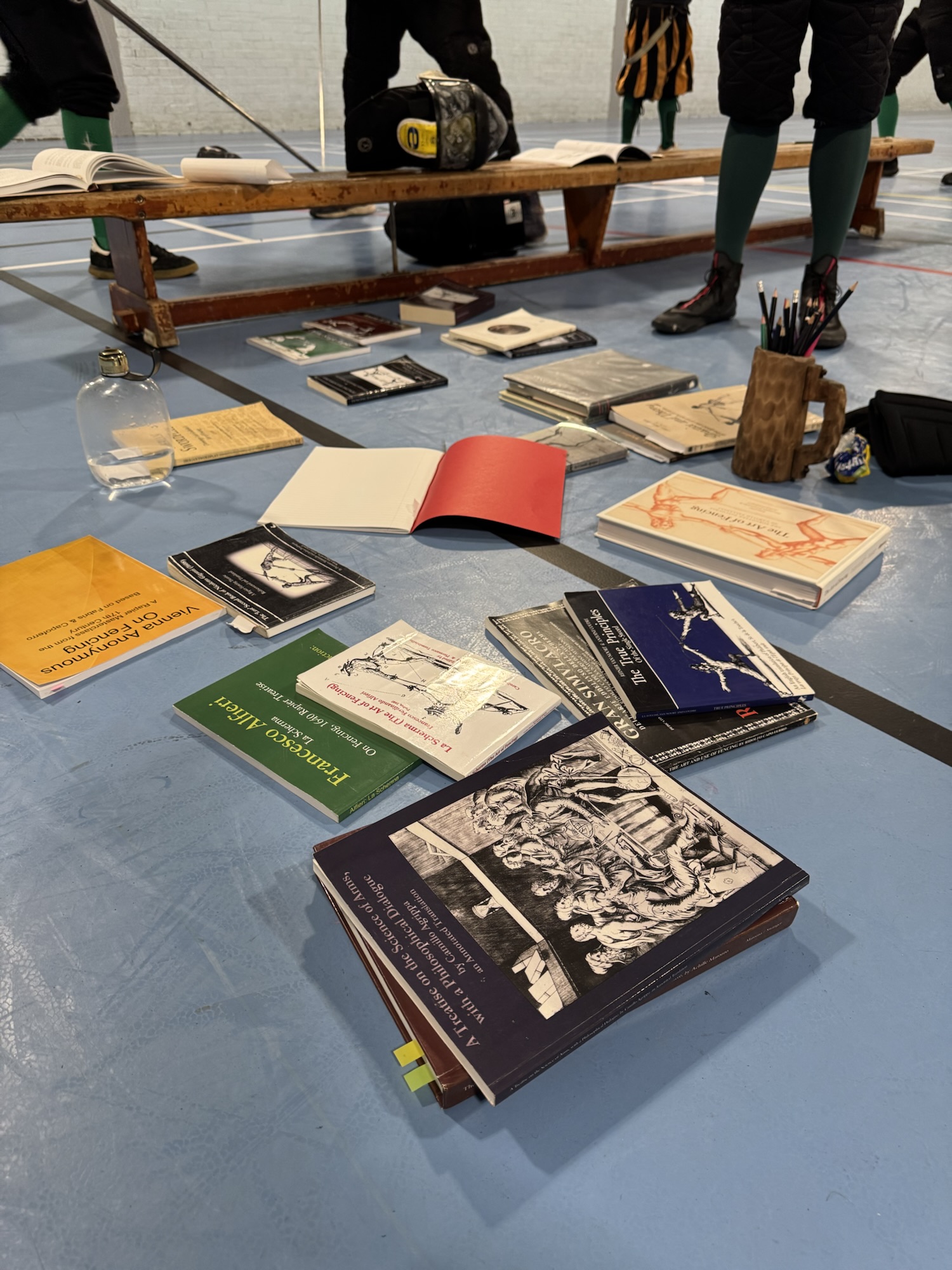

I’ve noticed there is a certain type of instructor out there, he (it’s always a he) promises to teach you all the best techniques, but he never encourages you to read a fight book. Today one of them even told me that reading the sources can be detrimental!
This is on the back of me encouraging fencers to be curious about the sources before they get into tournaments, the idea being that by developing a broader and deeper knowledge of fencing, you will be able to test your own theories in practice rather than rote copying someone else’s limited interpretation.
The average fencing master was often a veteran soldier, who had experience of many weapons, scenarios and outcomes. The ones who chose to write down their knowledge – allowing for marketing schemes – did so to share the sum of many years of fighting, teaching, and observing.
They knew a lot more than we do.
And you have the ability to plug into that knowledge. If you take the time to interpret sources you will discover fencing actions you may never have considered in years of fighting.
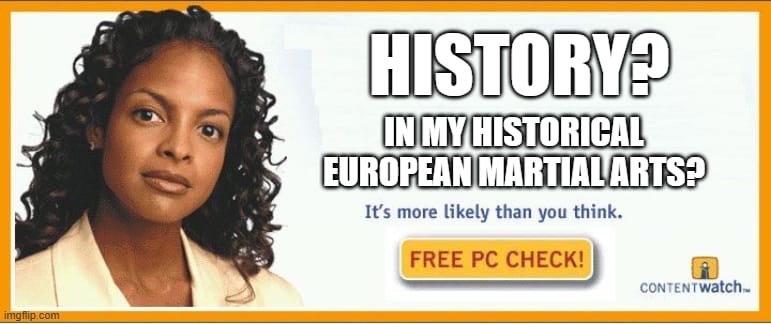
The whole point of HEMA is to recreate the actions these people were trying to convey. Anyone who dismisses this seeks to actively dumb down their own experience and/or that of others. Here is an inherent arrogance that they know more than everyone, including the masters whose knowledge they benefit from. There is a sensitive ego that cannot bear to be challenged, a poor quality in any fencer.
The best fencers are the ones who know a lot and fence a lot. You can’t develop your practical skills through reading books, and you won’t broaden your knowledge through fighting alone.
If you’re winning tournaments by virtue of being tall, fast and strong, experienced in other martial arts, or having good timing, congratulations. Eventually someone with all those virtues will come along who has also read a book and put its teachings into practice, successfully. If you’re happy to cede your crown to a worthy opponent keep not doing what you’re not doing, otherwise, pick up a book.
“…this beautiful profession shows us it is a science.
Science, therefore, is a certain and manifest knowledge of things that the intellect acquires. It is of two sorts—that is, speculative and practical. Speculative is a simple operation of the intellect around its appropriate object. Practical only consists in actual workings of the intellect.” – Nicoletto Giganti 1606
I could learn a language like a baby, just by talking to people. Or I could get a phrase book and repeat sounds without understanding what I’m saying. My language would eventually become fluent, I would be understood by most people and my vocabulary would extend to that of my interactions. But if I read a book on grammar, if I watched films and read literature in that language, my communication style would be elevated, nuanced, and adaptable to the social situations I find myself in. I’d have social cache, I’d be cool. It’s the same with historical fencing, or any activity that you can develop through research.
I get it, fight books are hard to read – they are dense, translated from ancient languages, essentially instruction manuals seen through a chain of biased narrators. If you are only following what your teacher gives you, you’re only getting their take, or rather, their own interpretation of their take – communicating what you know AKA teaching is hard. They have pre-chewed the food for you as it were. Read up on it, have the patience to work through a passage with a colleague, even if it’s just a small one – I promise you the experience alone will be rewarding.
Through books you also gain that most precious resource: community. Fencing is in fact a group activity – you’re building on the knowledge of your coaches, the experiences of fencing your peers and seasoned fighters, and through research you can reach a wider community of like minded people and compare your findings. You are part of an ongoing collaborative project, that encompasses everything that came before you and everything that will follow. In this you develop not only your own skill but increase the knowledge of the HEMA community itself. Everybody wins.
 By the Sword